Bothell Area, WA · Open 7 Days

Well Pump Service & Repair in Bothell Area, WA

No water pressure, water pump cycling constantly, or a pressure tank that has lost its charge? Pine Rooter services submersible well pumps, jet pumps, pressure tanks, and all well-side plumbing for rural properties in King, Pierce, and Snohomish counties.

  • Submersible and jet pump diagnosis and repair
  • Pressure tank testing and replacement
  • Well water quality and filtration assessment
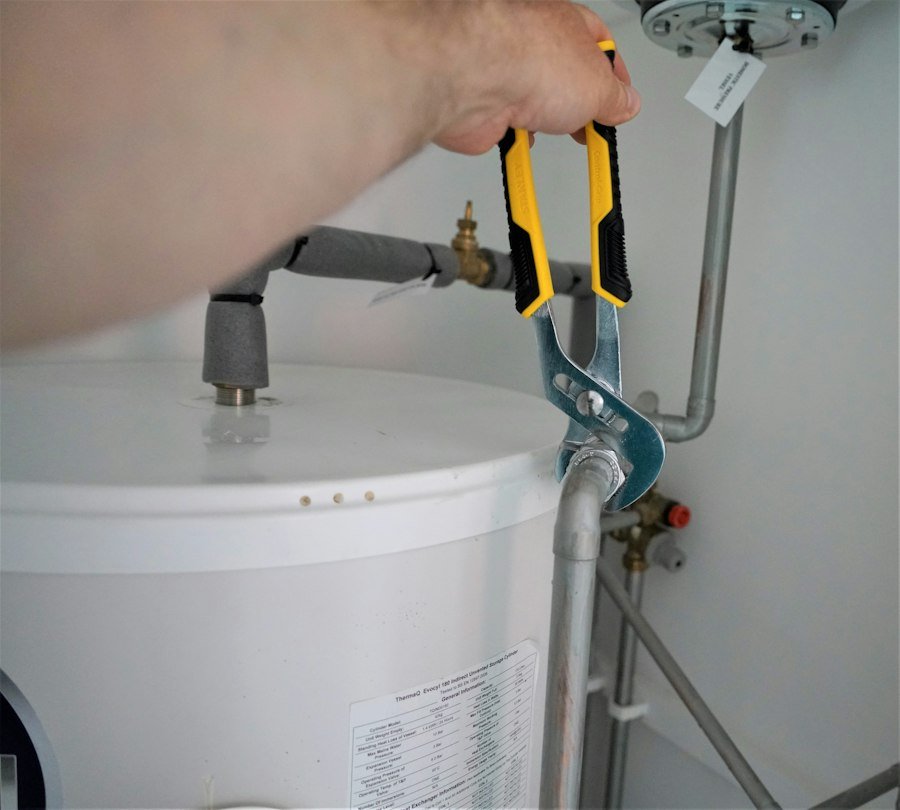
Pine Rooter technician servicing a well pump pipe fitting in the Bothell area, WA
5.0 Stars45 Reviews
Same DayService
10+ YrsExperience
5.0
45 Verified Reviews
10+
Years of Experience
Same-Day
Service Available
Licensed
& Fully Insured

How do you know if your well pump is failing?

The clearest signs are no water when you open a faucet, very low pressure that did not exist before, or the pump cycling on and off rapidly -- short cycling caused by a pressure tank that has lost its air charge. Submersible pumps installed deep in the well casing fail from bearing wear, capacitor failure, or motor winding damage, usually showing up as a gradual loss of pressure or a breaker that trips repeatedly. Jet pumps above ground fail more visibly and accessibly, with worn impellers or suction-line air leaks as the most common culprits. Diagnosing which component has failed -- pump, tank, or switch -- before recommending any repair is the difference between a five-minute part swap and an unnecessary pump pull.

Why Bothell-area homeowners choose Pine Rooter for well pump service

Experience with submersible and jet pumps

We service both submersible and jet pump systems. Diagnosis for each type follows the correct sequence — electrical first, then mechanical, then structural. We do not recommend pulling a submersible pump until we have confirmed through electrical and pressure testing that the pump itself, rather than an external component, is the failed element.

Pressure tank replacement same-day if in stock

We carry common pressure tank sizes on the truck. If the pressure tank bladder failure is confirmed during the service call, we can replace the tank the same day in most cases. Short cycling stops, the pump is protected from wear, and normal pressure is restored without a return visit to source the replacement tank.

Licensed plumbing for all well-side work

Well-side plumbing in Washington State requires a licensed plumber for pressure tank installation, supply line work, and pitless adapter replacement. All of our well pump service work is performed by licensed plumbers and meets state and county requirements. We pull permits when the scope of work requires them.

Water quality assessment included with service call

A well pump service call is an opportunity to check on the water quality as well as the equipment. If we observe sediment, discoloration, or odor issues during the service call, we recommend a water quality test and can advise on filtration and treatment options appropriate to the specific water quality conditions found.

Rural King, Pierce, and Snohomish County coverage

We serve rural properties throughout the Bothell metropolitan region — including eastern King County (Maple Valley, Issaquah, Snoqualmie), Snohomish County (Monroe, Lake Stevens, Marysville), and Pierce County (Enumclaw, Buckley). Distance from the urban core does not affect our pricing or response time for well pump emergencies.

Signs your well pump or pressure system needs service

  • No water from faucets with power confirmed on at the pump
  • Pump runs constantly without reaching shutoff pressure
  • Air sputtering from faucets when water is first opened
  • Pressure fluctuates dramatically during normal household use
  • Circuit breaker trips when pump activates
  • Sediment or discoloration in well water that is new or worsening

What to check before we get there

  • Check the circuit breaker for the pump. It is usually a double-pole breaker in the main panel labeled "well pump" or "pump." Reset it once if it has tripped. If it trips again immediately when the pump tries to start, leave it off — a pump circuit that repeatedly trips has a motor or electrical problem and should not be forced to run.
  • Note the pressure gauge reading on the pressure tank. If you can safely access the tank, look at the gauge — zero pressure, pressure that stays low and does not build, or pressure that fluctuates wildly are all useful diagnostic data points when we arrive.
  • Listen to the pump cycle. A pump that starts and stops every few seconds (short cycling) is almost always a pressure tank problem. A pump that runs continuously without building pressure is a pump output or pressure switch issue. Describing what you hear helps us bring the right components.
  • Do not repeatedly force the pump to start if the breaker is tripping. A pump motor that is overheating or failing can be damaged further by forcing it to run. Let it rest and call us — the diagnostic work tells us what the problem is before we attempt to operate the system.
  • Know the well depth and pump model if you have the paperwork from when the well was drilled or the pump was last replaced. This information helps us bring an appropriate replacement pump if pulling becomes necessary. Check the well cap, pump house, or utility room for any documentation left by the original installer.
  • Make sure the well cap, pump house, or pressure tank area is accessible and cleared of stored items -- easy access speeds up the diagnostic sequence considerably.

Match your symptom to the right service

Well pump problems, water quality problems, and pressure problems often get confused. Here is a quick way to tell which service applies.

Submersible and jet pumps serve different wells and require different approaches

The distinction between submersible and jet pumps matters practically because the diagnosis, repair process, and cost differ significantly between the two types. Knowing which one your well uses before calling avoids surprises and helps us arrive with the right equipment and parts.

Submersible pumps are installed inside the well casing at depth and are standard on wells more than 25 feet deep — which includes most productive wells in the Bothell region. They are efficient, quiet, and reliable, but any repair or replacement requires pulling the entire pump and drop pipe assembly from the well. Diagnosis always starts with electrical and pressure testing before recommending that the pump be pulled.

Jet pumps are located above ground — typically in a pump house, basement, or utility room — and draw water up from the well through suction. Jet pumps are entirely accessible, so diagnosis, repair, and replacement are faster and less disruptive than submersible work. The downside is efficiency and noise. For rural properties with jet pumps that are aging or inefficient, upgrading to a submersible system during a pump replacement is often worth evaluating.

Full-scope well pump services

From a failed pressure switch to a full pump pull, all diagnosed before any repair is recommended.

Submersible pump diagnosis and replacement

Electrical, capacitor, and output testing before recommending a pull from the well casing.

Jet pump repair and replacement

Impeller, priming, and motor repair for above-ground jet pump systems.

Pressure tank testing and replacement

Air charge testing and same-day bladder tank replacement to stop short cycling.

Pressure switch and wiring repair

Switch replacement and electrical diagnosis for pumps that will not start or will not stop.

Pitless adapter service

Diagnosis and replacement of the wellhead connection between the casing and the buried supply line.

Well water quality testing coordination

Bacteria, nitrate, and turbidity testing recommended and coordinated as part of service calls.

No water from your well? A pump that is not delivering water is an emergency.

Call for Emergency

How a well pump service call works

Every well pump service call follows a diagnostic sequence that identifies the failed component before any repair is recommended. We do not pull a pump to find the problem — we diagnose before we recommend pulling.

Pressure reading at tank and at fixtures

We start with pressure readings at the tank gauge and at fixtures to establish where in the system pressure is being lost. Low pressure that is consistent throughout the home points to the pump or pressure tank. Pressure that drops rapidly under use points to pump output below what the system needs.

Check pump circuit breaker and capacitor

We inspect the pump circuit breaker for tripping or heat damage and test the start capacitor for the pump motor. A failed capacitor is one of the most common causes of a submersible pump that hums but fails to start or delivers no water. Capacitor replacement is inexpensive and does not require pulling the pump.

Pressure tank air charge test

With the pump off and pressure bled down, we test the air charge in the pressure tank with a tire gauge at the Schrader valve. A healthy bladder tank should hold its pre-charge — typically 2 PSI below the cut-in pressure. A tank that reads zero or holds water at the Schrader valve has a failed bladder and needs replacement.

Inspect pressure switch contacts

We open the pressure switch cover and inspect the contacts for corrosion, arcing, or burning. Corroded contacts prevent reliable pump activation. We test the switch setpoints and confirm the cut-in and cut-out pressures are within the appropriate range for the system. A pressure switch that is failing is replaced on the same visit.

Assess pump performance — GPM delivery vs. expected

We test pump output by measuring flow rate and pressure under demand. A submersible pump that delivers significantly less than its rated GPM at the expected pressure may have worn impellers, a worn motor, or a drop pipe connection that has developed a leak. This assessment determines whether repair components or full pump replacement is the appropriate path.

Repair or replacement of failed component

We repair or replace the specific component the diagnosis identifies. Pressure tank replacements and pressure switch replacements happen on the same visit in most cases — we carry common tank sizes and switch types on the truck. Pump replacement is scheduled with the appropriate equipment once diagnosis confirms the pump is the failed element.

Water quality test recommended if issues found

If the service call reveals sediment in the system, discoloration in the water, or conditions that suggest surface water infiltration, we recommend a water quality test before closing out the call. A basic water test for bacteria, nitrates, and turbidity establishes a baseline and identifies any treatment needs.

Pine Rooter plumber during the well pump diagnostic process in the Bothell area, WA

What does well pump service cost in the Bothell area?

Cost depends on what is failing and what the repair requires -- from a straightforward pressure switch swap to a full submersible pump pull. We complete the diagnostic before quoting, since the range between the two is too wide to quote blind.

  • Component involved -- pressure switch vs. pressure tank vs. the pump itself
  • Submersible pump pull vs. accessible above-ground jet pump repair
  • Well depth and drop pipe length if a pump pull is required
  • Whether a water quality test or treatment recommendation follows the repair

Extend the life of your well pump system

Well pump systems last longer with a small amount of routine attention.

  • Test the pressure tank air charge annually, especially once the tank passes five years old
  • Test well water annually for bacteria and nitrates, per Washington State recommendations
  • Keep the wellhead cap sealed and inspect it after any flooding or heavy rain event
  • Address short cycling immediately -- every cycle adds wear the pump motor does not recover from
Get Your Estimate

Well water and well infrastructure in the Bothell metropolitan region

Rural properties in eastern King County (Maple Valley, Issaquah, Snoqualmie), Snohomish County (Monroe, Lake Stevens, Marysville), and Pierce County (Enumclaw, Buckley) commonly use private wells. Much of this infrastructure was installed in the 1960s through 1980s when these areas were first developed, and pump systems installed 30 or more years ago are reaching the end of their designed service life. A submersible pump is installed deep in the well casing and pushes water up through the drop pipe; a pressure tank stores pressurized water so the pump does not run every time a faucet opens; and the pressure switch signals the pump motor to start and stop at set pressures. A failure anywhere in that chain shows up as either no water or a pump that short-cycles.

Tree-lined residential street in Bothell, WA

The region's heavy annual rainfall keeps water tables high, supporting reliable well yields, but the same rainfall introduces surface water infiltration risk during wet seasons, particularly for older wells with compromised casings or improperly sealed wellheads. Surface infiltration can introduce bacteria, turbidity, and other contaminants. If a water quality test after a wet season shows bacterial contamination or turbidity that was not present before, surface infiltration is a likely cause and the well casing and cap should be inspected.

Code and disposal guidance: Washington State requires a licensed plumber for well-side plumbing work including pressure tank installation and pitless adapter replacement. Well pump replacement and any modification to the wellhead may also require notification to the Washington State Department of Ecology or the county health department depending on the scope of work and whether the well construction itself is affected, separate from the plumbing permit a county may require. Private well water is not tested by any utility, and Washington State recommends annual testing for bacteria and nitrates -- we recommend a test as part of any well pump service call, particularly after flooding or any system disturbance.

Well pump questions Bothell-area homeowners ask

Submersible well pumps typically last 15-25 years depending on water quality, operating hours, and maintenance history. Wells with iron-rich or corrosive water shorten pump life significantly. Pressure tanks with bladder-type construction typically last 5-10 years before the bladder fails. Pressure switches last 10-15 years. A well system that has been in service for more than 20 years without any component replacement is overdue for an assessment, even if it still appears to function.
In many cases, yes. A significant portion of well pump "failures" are actually failures of external components — the pressure tank, pressure switch, capacitor, or wiring — that can be replaced without touching the pump inside the well. Our diagnostic sequence always starts with these accessible components before concluding that the pump itself needs to be pulled. If the capacitor has failed and a new one restores operation, the pump stays in the well. If the pressure tank bladder has failed and replacement restores normal cycling, the pump stays in the well. Only when the electrical and pressure component tests confirm the pump is not delivering its rated output does a pump pull become the appropriate recommendation.
Most pressure tank failures are bladder failures. The rubber bladder inside the tank separates the water from the air charge. Over years of cycling — expanding and contracting with every pump cycle — the bladder develops micro-tears or abrasion points and eventually ruptures or leaks. When this happens, water enters the air side of the tank, the air charge is lost, and the tank no longer stores pressurized water. The pump cycles on and off with every small demand on the system rather than operating for sustained periods. You can test for bladder failure yourself by checking the Schrader valve (like a tire valve stem) on the air side of the tank — if water sprays out rather than air, the bladder has failed.
Private wells are not tested or treated by any utility — the water quality is entirely the homeowner's responsibility. Washington State recommends testing private well water annually for bacteria and nitrates, and testing for other parameters if the well is near agricultural land, has had flooding nearby, or if water characteristics change. A basic water test covering bacteria (total coliform and E. coli), nitrates, and basic chemistry is inexpensive and provides important safety information. We recommend a water test as part of any well pump service call, particularly if there have been any recent system disturbances, flooding events, or changes in water appearance, odor, or taste.
Washington State requires a licensed plumber for the plumbing work associated with well pump replacement, including pressure tank installation and supply line connections. Whether a permit is required for the pump replacement itself depends on the county and the scope of work. King, Snohomish, and Pierce counties each have their own requirements. We determine permit requirements before beginning any well pump replacement and handle the permit process when it is required. Work that requires a permit but is done without one creates problems at the time of future property sale, and we do not cut corners on permit requirements.

Other services that work with well pump service

Well pump service often points to water quality, supply pressure, or filtration needs. These related services address what the well system diagnosis reveals.

One call fixes it

A well that is not delivering water is not a problem to wait on

No water from a private well is an urgent situation. Pine Rooter diagnoses well pump systems thoroughly before recommending any repair, and we carry common replacement components on the truck. Call now and we will restore your water supply as quickly as possible.

Book a Plumber