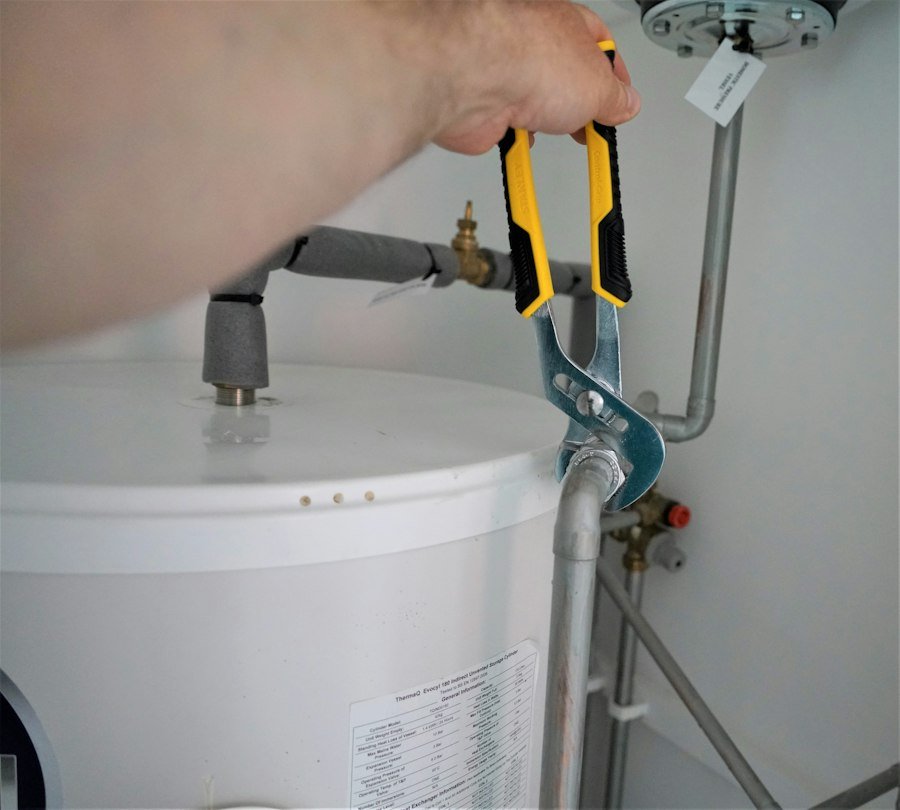
Annual backflow testing required by Bothell Public Utilities? Pine Rooter's certified testers test, certify, and repair backflow prevention devices for residential and commercial properties. We file the results directly with Bothell PU and send you the certificate.
Backflow occurs when pressure in the public water main drops suddenly and pulls water backward from a private connection -- an irrigation system, fire suppression line, or commercial facility -- into the drinking water supply. If that water has been in contact with fertilizer, chemicals, or bacteria, the public supply becomes contaminated. Backflow prevention devices use mechanical check valves to stop this reverse flow, but the springs, seats, and valves inside them wear down with age and use, so Bothell Public Utilities requires annual testing to confirm each device still functions correctly -- a device that passed last year's test can fail this year's without any visible warning.
Our testers hold current Washington State backflow tester certifications. Certification requires training, examination, and renewal -- not every plumber is a certified backflow tester. Unlicensed testing does not satisfy SPU requirements, and the results cannot be filed. We bring proper credentials to every job.
We handle the paperwork. After testing, we file the results directly with Bothell Public Utilities on your behalf. You receive a passing certificate at the end of the visit and do not have to navigate the SPU submission process yourself. The filing confirms your annual compliance obligation is met.
We carry repair kits for the most common backflow preventer brands -- Watts, Febco, Wilkins, Ames -- on every truck. When a device fails the test, we frequently repair and retest the same visit, so you leave the day with a passing certificate rather than an open compliance issue waiting for a return visit.
You receive your passing test certificate at the conclusion of the visit, not days later by mail. If you received an SPU non-compliance notice with a deadline, the same-day certificate provides immediate documentation that the test has been completed and filed.
We test and repair DCVAs, RPZ assemblies, PVBs, and AVBs across all major manufacturers. We also install new backflow prevention devices when a property does not yet have one, or when an existing device is too corroded to repair and requires full replacement.
Backflow issues sometimes point to a different underlying problem. Here is a quick way to tell which service actually solves what you are seeing.
This is exactly what certified annual backflow testing resolves -- test, repair if needed, and filing all in one visit.
This service handles itNew irrigation connections need a compliant backflow preventer installed and registered before they can be turned on. Outdoor plumbing handles the irrigation shutoffs and supply work around it.
See Outdoor PlumbingFor commercial properties or pre-purchase inspections, a camera inspection documents the condition of the piping around a backflow assembly.
See Video InspectionA backflow preventer restricts flow slightly by design, but a significant pressure drop usually means a regulator or supply sizing issue. Water pressure service diagnoses the cause.
See Water PressureDouble check valve assembly (DCVA). The double check valve assembly is the most common backflow prevention device on residential properties in Bothell. It is required on most residential irrigation systems and other low to medium hazard cross-connections. The DCVA contains two independently operating check valves in series, so if one fails, the other still prevents backflow. Annual testing confirms both check valves are seating and holding pressure correctly.
Reduced pressure zone assembly (RPZ). The RPZ is required for high hazard connections -- medical facilities, facilities that handle chemicals, fire suppression systems with chemical additives, and any connection where contamination of the potable supply would pose a significant public health risk. If both check valves fail simultaneously, a relief valve opens and dumps the potentially contaminated water to drain rather than allowing it into the supply.
Pressure vacuum breaker (PVB). A pressure vacuum breaker protects irrigation systems at properties where the device can be installed above the highest sprinkler head. It uses a spring-loaded poppet and a vacuum breaker that opens to admit air if backflow pressure is detected. PVBs must be installed at least 12 inches above the highest point of the irrigation system they serve.
Atmospheric vacuum breaker (AVB). A simple, low-cost device used on individual fixture connections -- hose bibs, laundry connections, and similar non-continuous-pressure applications. AVBs are generally not subject to the same annual test-and-certify requirement because they cannot be tested with gauges the way the other three device types can.
From a single residential test to a commercial property with a dozen registered assemblies, one certified team handles the whole scope.
Certified testing of every backflow assembly type using calibrated differential pressure test kits, on the schedule your utility requires.
Check valve seats, springs, relief valves, and diaphragms repaired or rebuilt on the truck for the most common device brands.
New DCVA, RPZ, or PVB installation for irrigation systems, fire lines, and commercial connections that do not yet have a registered device.
Assessment of irrigation cross-connections to confirm the correct device type and hazard classification is installed and registered.
Multi-device commercial properties and fire suppression connections tested and documented in a single scheduled visit.
Test results filed directly with Bothell Public Utilities or the applicable local water purveyor, with a passing certificate issued the same day.
Annual backflow testing follows a defined process from scheduling through certificate issuance. Every step is required by the certification protocol, and nothing is skipped.
Call us with your property address, the type of backflow device if you know it, and your SPU account information if available. We schedule same-day testing when deadlines are urgent. We also set up annual reminders so next year's test does not slip past due without notice.
We locate the backflow preventer at your property -- in an irrigation valve box, at the meter, in the mechanical room, or at the service connection. If you are not certain where the device is, we find it. Access to the device and the upstream shutoff valve is required for testing.
The calibrated differential pressure test kit connects to the device's test cocks. The test cock connections are specific to the device type and position. We use the correct configuration for each device to ensure the gauge readings reflect actual device performance and not a measurement artifact.
The test sequence for each device type -- DCVA, RPZ, or PVB -- follows the Washington State-approved testing protocol. We operate the shutoff valves and test cocks in the required sequence, record gauge readings at each step, and evaluate the results against the minimum performance criteria for the device type.
Results are recorded on the standardized test report form. If the device passes, we proceed to filing. If it fails, we explain which component failed and what repair is needed. We carry repair kits for most common devices and can frequently complete the repair and retest the same visit, achieving a passing result without a return trip.
We file the test results directly with Bothell Public Utilities on your behalf. You receive a passing certificate at the end of the visit confirming the device has been tested by a certified tester and the results have been submitted. Your SPU record is updated and your annual compliance obligation is met.
Annual testing for a standard residential DCVA is a straightforward service with predictable cost. Commercial properties with multiple devices, RPZ assemblies requiring more complex procedures, or a device that needs repair before it can pass will cost more. We quote testing and any repair separately, before any work is done.
A few simple habits reduce the odds of a failed test and an urgent repair call.
Bothell Public Utilities maintains a registry of all backflow prevention assemblies within its service area. When a device is installed on a property, it is registered with SPU and assigned to the property's account. SPU sends annual reminder notices to registered property owners when the annual test is due. Failure to respond to these notices and complete the required testing within the specified timeframe can result in a non-compliance notice, followed by service interruption if the issue remains unresolved. Pine Rooter is an approved tester on SPU's qualified tester list, which means our test results are accepted by SPU and can be filed on behalf of any registered device in the service area.
The SPU backflow program covers the City of Bothell service area. Properties in other jurisdictions -- Bellevue, Redmond, Kirkland, Renton, and other cities served by their own water utilities -- have their own backflow testing requirements administered by those utilities. Backflow testing itself is also a specific, regulated procedure: it is not a visual inspection but a calibrated differential-pressure test performed by a tester holding a current Washington State backflow tester certification, with the test kit gauges calibrated annually and every result recorded on a standardized form.
Code and testing guidance: Washington State plumbing regulations require that backflow prevention assemblies on identified hazard connections be tested at least annually by a certified backflow assembly tester, with results reported to the local water purveyor -- in Bothell's case, Bothell Public Utilities. New backflow preventer installations and device replacements generally require a permit and installation by a licensed plumber. Property owners should confirm a tester's current WA state certification and verify the device is registered with the correct utility before relying on a test result for compliance purposes.
Backflow testing is often connected to other plumbing work at the same property or leads to related services when issues are found.